
-
01
Tell us where you’re headed.
A short questionnaire on your goal, your background and your time. It turns into a project that fits you.
-
02
Get a real research project.
A computational project scoped to 3–6 months, with its own workspace and milestones.
-
03
Learn exactly what it needs.
A course built around your project. Each lesson unlocks when you pass the one before it.
-
04
Study at textbook depth.
Lessons with equations and diagrams, then a quiz, a reading check and homework before you move on.
-
05
Never get stuck alone.
An advisor that knows your project and your lesson, beside a library for your papers and highlights.
-
06
Build the model.
Keep your notes, sketches and equations in one research notebook while the simulation comes together.
-
07
Publish work you can show.
A public GitHub repository and a technical report: proof for your next application.
-
08
Put it on your résumé.
The project becomes a line you can stand behind, with the code and the report one link away.
002/ THE SOLUTION
Pick your dream career.
A clear route from your goal to work you can show.
003/ RESUME EXAMPLE
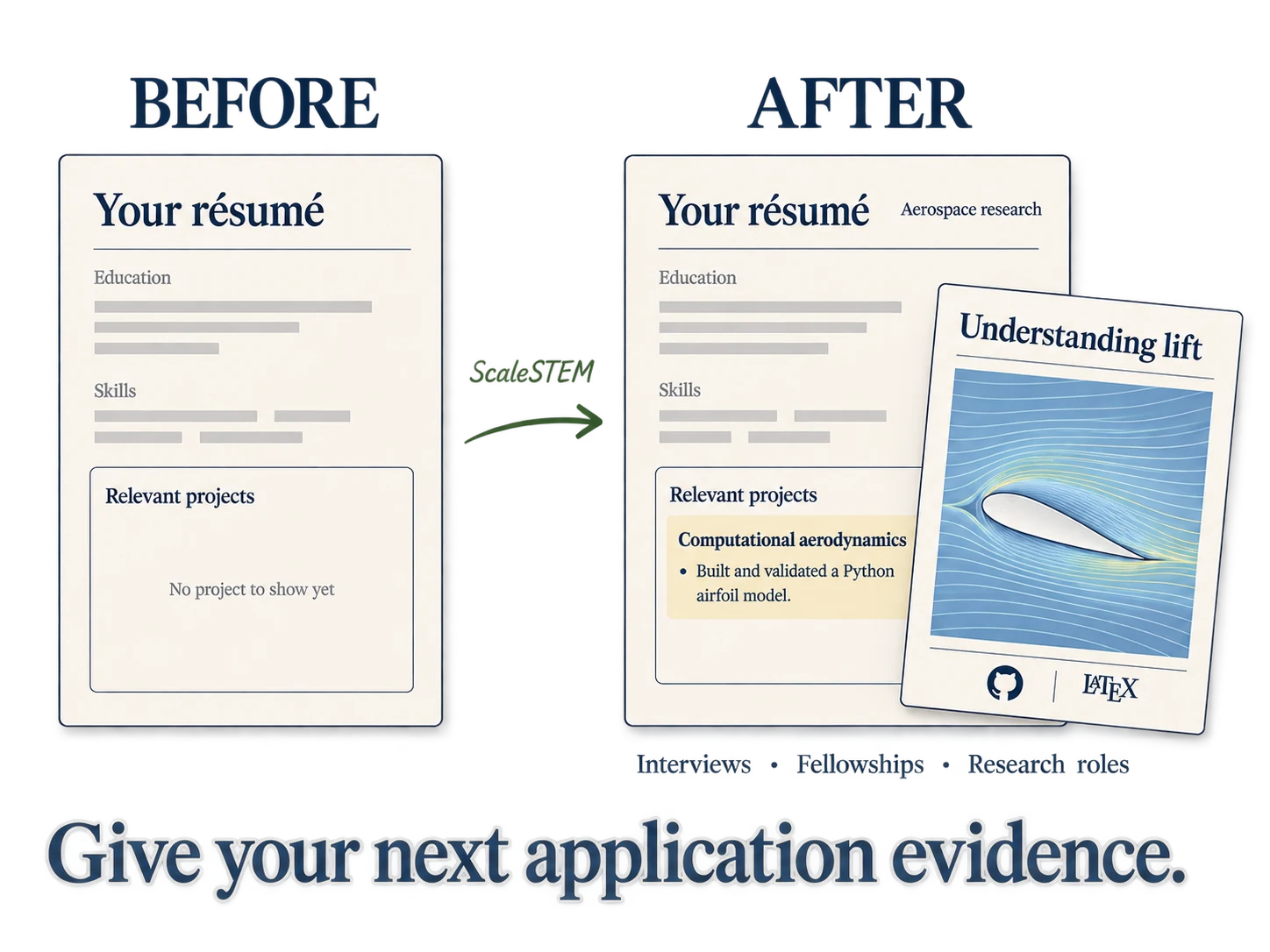
See the effect that one computational research project can have for you.
BeforeAfter
- A real research project
- Code and a report behind it
- A new modeling skill
Keep scrolling to add the project.
Jordan Lee
Mechanical Engineering · Modeling & Simulation
Denver, CO
jordan.lee@example.edu
github.com/jordanlee
Education
Western Plains UniversityMay 2027
B.S. Mechanical Engineering · GPA 3.62/4.00
Coursework: Numerical Methods, Dynamics, Thermodynamics, Linear Algebra
Research experience
Undergraduate Lab Assistant2025 to Present
Energy Systems Lab
- Prepare sensor assemblies and organize experimental readings for weekly lab review.
- Maintain lab notes and create plots from collected datasets in Python and MATLAB.
Selected projects
Computational Aerodynamics: Teardrop Airfoil3 months
ScaleSTEM Guided Research
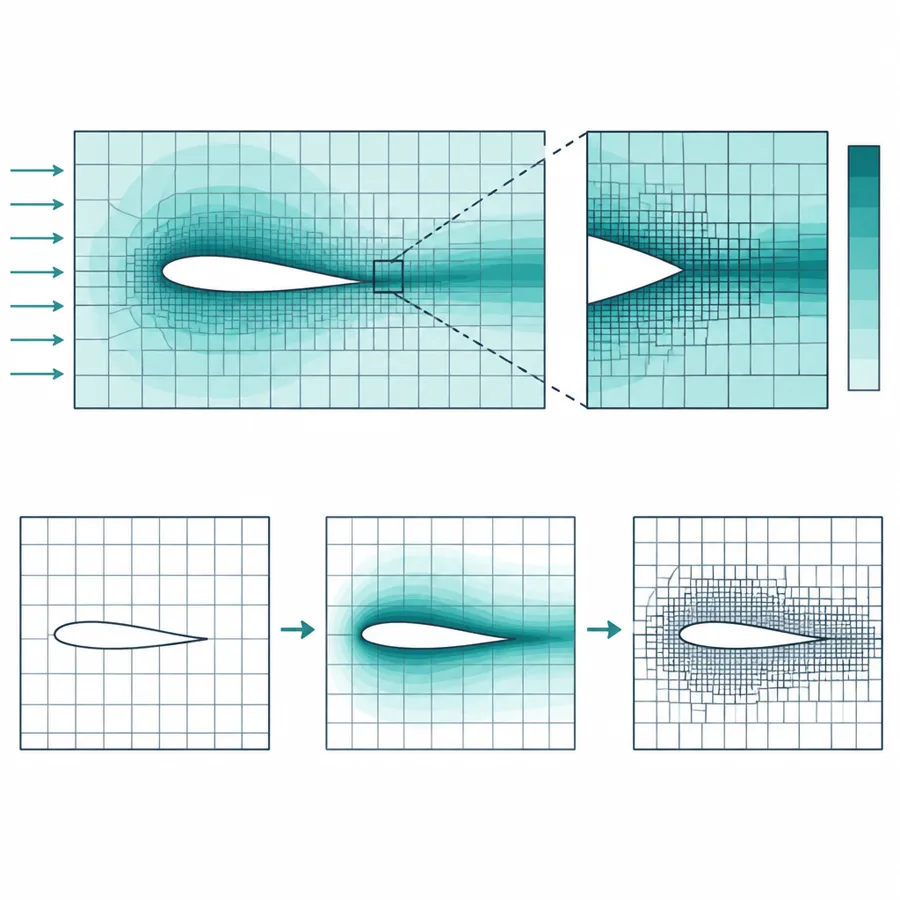
- Built and validated a Python airfoil model, simulating airflow around an aerodynamic teardrop.
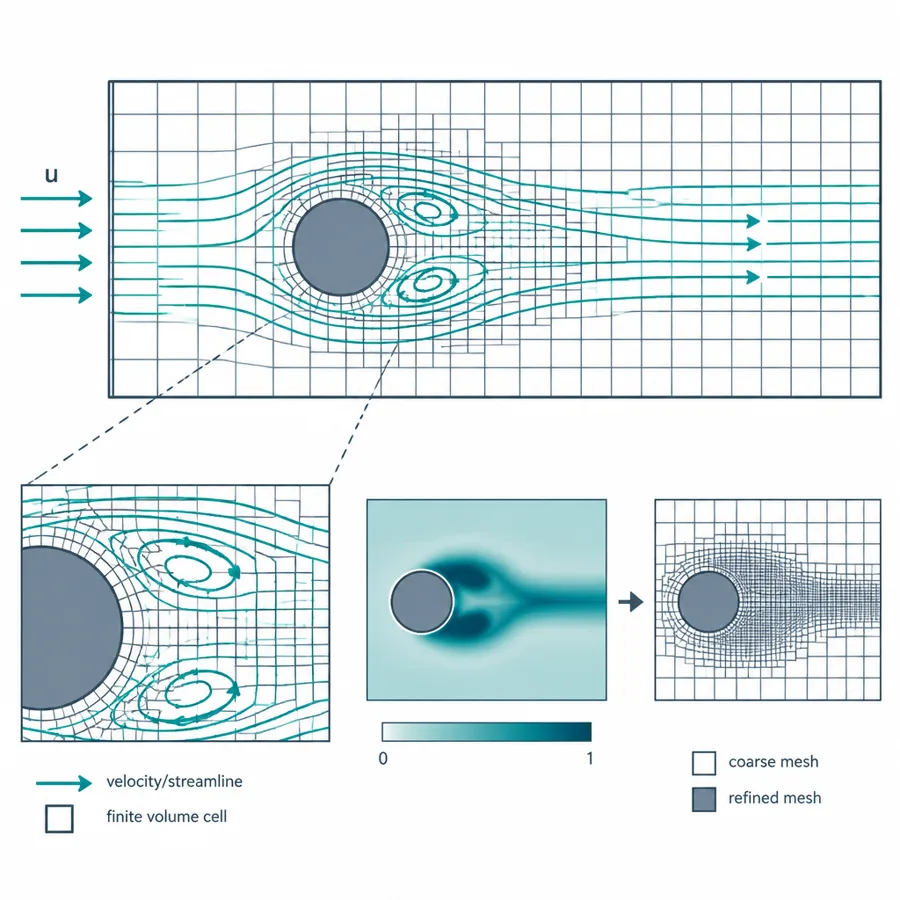
- Documented methods, validation, and streamline results in a technical report reviewed with mentor feedback.
Microcontroller Temperature LoggerFall 2025
- Built an Arduino temperature logger and summarized readings from a short lab study.
Mechanism Design StudySpring 2025
- Modeled a linkage assembly in SolidWorks and documented design constraints.
Technical skills
Programming: Python, MATLAB, C++
Tools: Git, Jupyter, SolidWorks
Methods: Data cleaning, visualization, lab documentation
Modeling: Computational aerodynamics, airflow simulation
Campus involvement
Peer Tutor, Engineering Learning Center2025 to Present
Support first-year students in statics and introductory programming.
ILLUSTRATIVE SAMPLE · BEFORE SCALESTEM